
Jerry Bridges
Gospel-Driven Sanctification
© 2003, Modern Reformation Magazine (May / June Issue, Vol. 12.3). All Rights Reserved.
Early in my Christian life I heard someone say, "The Bible was not given to increase your knowledge but to guide your conduct." Later I came to realize that this statement was simplistic at best and erroneous at worst. The Bible is far more than a rulebook to follow. It is primarily the message of God's saving grace through Jesus Christ, with everything in Scripture before the cross pointing to God's redemptive work and everything after the cross--including our sanctification--flowing from that work.
There is an element of truth in this statement, however, and the Holy Spirit used it to help me to see that the Bible is not to be read just to gain knowledge. It is, indeed, to be obeyed and practically applied in our daily lives. As James says, "But be doers of the word, and not hearers only, deceiving yourselves" (James 1:22).
With my new insight, I prayed that God would use the Bible to guide my conduct. Then I began diligently to seek to obey it. I had never heard the phrase "the pursuit of holiness," but that became my primary goal in life. Unfortunately, I made two mistakes. First, I assumed the Bible was something of a rulebook and that all I needed to do was to learn what it says and go do it. I knew nothing of the necessity of depending on the Holy Spirit for his guidance and enablement.
Still worse, I assumed that God's acceptance of me and his blessing in my life depended on how well I did. I knew I was saved by grace through faith in Christ apart from any works. I had assurance of my salvation and expected to go to heaven when I died. But in my daily life, I thought God's blessing depended on the practice of certain spiritual disciplines, such as having a daily quiet time and not knowingly committing any sin. I did not think this out but just unconsciously assumed it, given the Christian culture in which I lived. Yet it determined my attitude toward the Christian life.
Performance-Based Discipleship
My story is not unusual. Evangelicals commonly think today that the gospel is only for unbelievers. Once we're inside the kingdom's door, we need the gospel only in order to share it with those who are still outside. Now, as believers, we need to hear the message of discipleship. We need to learn how to live the Christian life and be challenged to go do it. That's what I believed and practiced in my life and ministry for some time. It is what most Christians seem to believe.
As I see it, the Christian community is largely a performance-based culture today. And the more deeply committed we are to following Jesus, the more deeply ingrained the performance mindset is. We think we earn God's blessing or forfeit it by how well we live the Christian life.
Most Christians have a baseline of acceptable performance by which they gauge their acceptance by God. For many, this baseline is no more than regular church attendance and the avoidance of major sins. Such Christians are often characterized by some degree of self-righteousness. After all, they don't indulge in the major sins we see happening around us. Such Christians would not think they need the gospel anymore. They would say the gospel is only for sinners.
For committed Christians, the baseline is much higher. It includes regular practice of spiritual disciplines, obedience to God's Word, and involvement in some form of ministry. Here again, if we focus on outward behavior, many score fairly well. But these Christians are even more vulnerable to self-righteousness, for they can look down their spiritual noses not only at the sinful society around them but even at other believers who are not as committed as they are. These Christians don't need the gospel either. For them, Christian growth means more discipline and more commitment.
Then there is a third group. The baseline of this group includes more than the outward performance of disciplines, obedience, and ministry. These Christians also recognize the need to deal with sins of the heart like a critical spirit, pride, selfishness, envy, resentment, and anxiety. They see their inconsistency in having their quiet times, their failure to witness at every opportunity, and their frequent failures in dealing with sins of the heart. This group of Christians is far more likely to be plagued by a sense of guilt because group members have not met their own expectations. And because they think God's acceptance of them is based on their performance, they have little joy in their Christian lives. For them, life is like a treadmill on which they keep slipping farther and farther behind. This group needs the gospel, but they don't realize it is for them. I know, because I was in this group.
The Gospel Is for Believers
Gradually over time, and from a deep sense of need, I came to realize that the gospel is for believers, too. When I finally realized this, every morning I would pray over a Scripture such as Isaiah 53:6," All we like sheep have gone astray; we have turned every one to his own way; and the Lord has laid on him the iniquity of us all," and then say, "Lord, I have gone astray. I have turned to my own way, but you have laid all my sin on Christ and because of that I approach you and feel accepted by you."
I came to see that Paul's statement in Galatians 2:20, "The life I now live in the flesh I live by faith in the Son of God who loved me and gave himself for me," was made in the context of justification (see vv. 15-21). Yet Paul was speaking in the present tense: "The life I now live ...." Because of the context, I realized Paul was not speaking about his sanctification but about his justification. For Paul, then, justification (being declared righteous by God on the basis of the righteousness of Christ) was not only a past-tense experience but also a present-day reality.
Paul lived every day by faith in the shed blood and righteousness of Christ. Every day he looked to Christ alone for his acceptance with the Father. He believed, like Peter (see 1 Pet. 2:4-5), that even our best deeds -- our spiritual sacrifices -- are acceptable to God only through Jesus Christ. Perhaps no one apart from Jesus himself has ever been as committed a disciple both in life and ministry as the Apostle Paul. Yet he did not look to his own performance but to Christ's "performance" as the sole basis of his acceptance with God.
So I learned that Christians need to hear the gospel all of their lives because it is the gospel that continues to remind us that our day-to-day acceptance with the Father is not based on what we do for God but upon what Christ did for us in his sinless life and sin-bearing death. I began to see that we stand before God today as righteous as we ever will be, even in heaven, because he has clothed us with the righteousness of his Son. Therefore, I don't have to perform to be accepted by God. Now I am free to obey him and serve him because I am already accepted in Christ (see Rom. 8:1). My driving motivation now is not guilt but gratitude.
Yet even when we understand that our acceptance with God is based on Christ's work, we still naturally tend to drift back into a performance mindset. Consequently, we must continually return to the gospel. To use an expression of the late Jack Miller, we must "preach the gospel to ourselves every day." For me that means I keep going back to Scriptures such as Isaiah 53:6, Galatians 2:20, and Romans 8:1. It means I frequently repeat the words from an old hymn, "My hope is built on nothing less than Jesus' blood and righteousness."
No "Easy Believism"
But doesn't this idea that our acceptance with God is based solely on Christ's work apart from our performance lead to a type of "easy believism"? In its most basic form, this is the notion that "Since I asked Christ to be my Savior, I am on my way to heaven regardless of how I live. It doesn't matter if I continue in my sinful lifestyle. God loves and will accept me anyway."
By a similar way of thinking, the claim that God's acceptance and blessing are based solely on Christ's work could be taken to mean that it really doesn't matter how I live right now. If Jesus has already "performed" in my place, then why go through all the effort and pain of dealing with sin in my life? Why bother with the spiritual disciplines and why expend any physical and emotional energy to serve God during this earthly life if everything depends on Christ?
The Apostle Paul anticipated such "easy believism" in Romans 6:1 when he wrote, "What shall we say then? Are we to continue in sin that grace may abound?" His response in Romans 6:2, "By no means! How can we who died to sin still live in it?" answers the question, "Why bother?" Paul was not responding with "How could you be so ungrateful as to think such a thing?" No, instead he is saying, in effect, "You don't understand the gospel. Don't you realize that you died to sin and if you died to sin, it's impossible for you to continue to live in it" (see Rom. 6:3-14).
We Died to Sin
Now, however, we come to a big question. What does Paul mean when he says we died to sin? It's fairly obvious he doesn't mean we died to the daily committal of sin. If that were true, no honest person could claim to be justified because we all sin daily. None of us truly loves God with our whole being and none of us actually loves our neighbor as ourselves (see Matt. 22:35-40). Nor does it mean we have died in the sense of being no longer responsive to sin's temptations, as some have taught. If that were true, Peter's admonition to abstain from the passions of the flesh would be pointless (see 1 Pet. 2:11). So what does Paul mean?
Some Bible commentators believe that Paul means only that we have died to the penalty of sin. That is, because of our union with Christ, when Christ died to sin's penalty we also died to sin's penalty. Well, it certainly means that, but it also means much more. It also means we died to sin's dominion.
What is the dominion of sin? In Romans 5:21, Paul speaks of sin's reign. And in Colossians 1:13, he speaks of the domain of darkness. When Adam sinned in the Garden, we all sinned through our legal union with him (see Rom. 5:12-21). That is, because of our identity with Adam we all suffered the consequence of his sin. And a part of that consequence is to be born into this world under the reign or dominion of sin. Paul describes what it means to be under this dominion in Ephesians 2:1-3. He says we were spiritually dead; we followed the ways of the world and the devil; we lived in the passions of our sinful natures and were, by nature, objects of God's wrath.
This slavery to the dominion of sin then is part of the penalty due to our guilt of sin. Through our union with Christ in his death, however, our guilt both from Adam's and from our own personal sins was forever dealt with. Having died with Christ to the guilt of sin, we also as a consequence died to the dominion of sin. We cannot continue in sin as a dominant way of life because the reign of sin over us has forever been broken.
This death to the dominion of sin over us is known theologically as definitive sanctification. It refers to the decisive break with, or separation from, sin as a ruling power in a believer's life. It is a point-in-time event, occurring simultaneously with justification. It is the fundamental change wrought in us by the monergistic action of the Holy Spirit (that is, by the Spirit acting alone without human permission or assistance) when he delivers us from the kingdom of darkness and transfers us into the kingdom of Christ. This definitive break with the dominion of sin occurs in the life of everyone who trusts in Christ as Savior. There is no such thing as justification without definitive sanctification. They both come to us as a result of Christ's work for us.
Consider Yourselves Dead to Sin
So we are free from both the guilt and the dominion of sin. But what use is this information to us? How can it help us live out a gospel-based pursuit of sanctification? Here Paul's instructions in Romans 6:11 are helpful: "So you also must consider yourselves dead to sin and alive to God in Christ Jesus."
It is important we understand what Paul is saying here because he is not telling us to do something but to believe something. We are to believe that we are dead through Christ to both sin's penalty and its dominion. But this is not something we make come true by believing it. We simply are dead to sin, whether we believe it or not. But the practical effects of our death to sin can be realized only as we believe it to be true.
The fact is that we are guilty in ourselves, but God no longer charges that guilt against us because it has already been borne by Christ as our substitute. The sentence has been served. The penalty has been paid. We have died to sin, both to its guilt and to its dominion. That is why Paul can write, "Blessed is the man against whom the Lord will not count his sin" (Rom. 4:8).
But the question arises, "If I've died to sin's dominion, why do I still struggle with sin patterns in my life?" The answer to that question lies in the word struggle. Unbelievers do not struggle with sin. They may seek to overcome some bad habit, but they do not see that habit as sin. They do not have a sense of sin against a holy God. Believers, on the other hand, struggle with sin as sin. We see our sinful words, thoughts, and deeds as sin against God; and we feel guilty because of it. This is where we must continue to go back to the gospel. To consider ourselves dead to sin is to believe the gospel.
This doesn't mean that we just believe the gospel and live complacently in our sin. Absolutely not! Go back again to Paul's words in Romans 6:1-2. We died both to sin's guilt and its dominion. Though sin can wage war against us (hence our struggle), it cannot reign over us. That is also part of the gospel. But the success of our struggle with sin begins with our believing deep down in our hearts that regardless of our failures and our struggle, we have died to sin's guilt. We must believe that however often we fail, there is no condemnation for us (Rom. 8:1).
William Romaine, who was one of the leaders of the eighteenth-century revival in England, wrote, "No sin can be crucified either in heart or life unless it first be pardoned in conscience.... If it be not mortified in its guilt, it cannot be subdued in its power." What Romaine was saying is that if you do not believe you have died to sin's guilt, you cannot trust Christ for the strength to subdue its power in your life. So the place to begin in dealing with sin is to believe the gospel when it says you have died to sin's guilt.
Progressive Sanctification
Warring against our sinful habits and seeking to put on Christlike character is usually called sanctification. But because the term definitive sanctification is used to describe the point-in-time deliverance from the dominion of sin, it is helpful to speak of Christian growth in holiness as progressive sanctification. Additionally, the word progressive indicates continual growth in holiness over time. The New Testament writers both assume growth (see 1 Cor. 6:9-11; Eph. 2:19-21; Col. 2:19; 2 Thess. 1:3); and continually urge us to pursue it (see 2 Cor. 7:1; Heb. 12:14; 2 Pet. 3:18). There is no place in authentic Christianity for stagnant, self-satisfied, and self-righteous Christians. Rather we should be seeking to grow in Christlikeness until we die.
This progressive sanctification always involves our practice of spiritual disciplines, such as reading Scripture, praying, and regularly fellowshipping with other believers. It also involves putting to death the sinful deeds of the body (see Rom. 8:13) and putting on Christlike character (see Col. 3:12-14). And very importantly it involves a desperate dependence on Christ for the power to do these things, for we cannot grow by our own strength.
So sanctification involves hard work and dependence on Christ; what I call dependent effort. And it will always mean we are dissatisfied with our performance. For a growing Christian, desire will always outstrip performance or, at least, perceived performance. What is it then that will keep us going in the face of this tension between desire and performance? The answer is the gospel. It is the assurance in the gospel that we have indeed died to the guilt of sin and that there is no condemnation for us in Christ Jesus that will motivate us and keep us going even in the face of this tension.
We must always keep focused on the gospel because it is in the nature of sanctification that as we grow, we see more and more of our sinfulness. Instead of driving us to discouragement, though, this should drive us to the gospel. It is the gospel believed every day that is the only enduring motivation to pursue progressive sanctification even in those times when we don't seem to see progress. That is why I use the expression "gospel-driven sanctification" and that is why we need to "preach the gospel to ourselves every day."
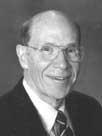
Jerry Bridges is a staff member with the Navigator collegiate ministry group. A prolific and best-selling author, his most recent book is The Gospel for Real Life (Navpress, 2002).
The quotation from William Romaine comes from his The Life, Walk and Triumph of Faith (Cambridge, England: James Clarke and Co. Ltd., 1793), p. 280

Comments: